
'We had to get out of the way': the backlash against delivery robots
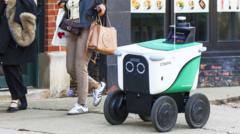
Image: BBC News
The first time Chicago resident Josh Robertson saw a delivery robot trundling down his street, he thought it was kind of neat. "It felt futuristic," he says.
That changed on a family walk, when another robot approached and his group found themselves stepping aside to let it pass. "To us it felt a little off — the fact that we were on the one strip reserved for walking, and we were having to get out of the way," he says.
Robertson is far from alone. Autonomous urban delivery vehicles — six-wheeled boxes that ferry groceries and fast food using cameras, sensors and GPS — have rolled onto pavements across the US, UK, Japan, South Korea and Germany. And the welcome is cooling fast.
The companies insist the machines reliably spot and dodge obstacles, cross streets safely and cut traffic and emissions. Critics aren't convinced. San Francisco has restricted them to quieter areas, Toronto has banned them from sidewalks since 2021, and Chicago has now barred them from two neighbourhoods.
Why it matters: Robertson wants the robots suspended across all of Chicago until safety tests are done and clear rules exist, and his petition has drawn around 4,400 signatures. The clash captures a broader question cities everywhere are dodging: who owns the pavement, and who yields when humans and robots share it?
For many residents, the annoyance is practical — blocked paths, blinking lights, the faint absurdity of dodging a cooler on wheels. For officials, it's about sovereignty over public space and the pace of automation outrunning the law.
What's next: As the fleets grow, expect more bans, more lawsuits and a scramble to write the sidewalk rules before the robots write them first.