Is scanning your food with an app actually making you healthier?
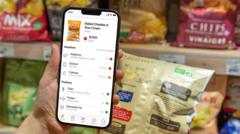
Image: BBC News
With a packet of biscuits in one hand and her phone in the other, Nathalie sees red — literally. A French supermarket app has just scored her son's favourite snack 0/100, and flagged a food additive she'd never heard of.
She's one of a growing army of shoppers using Yuka, a French app that lets you scan a barcode and instantly grades six million products from green (good) to red (bad). About 1,200 new items land in its database every day.
For Nathalie, the verdict is stark: "That they can put this sort of thing in food aimed at children drives me nuts!" Her son Malo, 12, now dreads shopping with her — she lingers over every label, and he can rarely have what he wants.
Why it matters: Apps like Yuka tap into a deep, global anxiety about what's really in our food. By turning complex ingredient lists into a simple traffic light, they promise to hand power back to consumers — but they also reshape behaviour in ways worth questioning.
The app suggests healthier swaps, often organic. But as Nathalie notes, "you end up buying a lot more organic stuff, so it's more expensive" — a hidden cost that nudges shoppers toward pricier baskets.
Critics say the scoring can oversimplify: a red rating on one additive doesn't make a product poison, and the apps can miss nuance around portion size and overall diet. Yet for many, the nudge is the point — a quick prompt to think before tossing something in the trolley.
What's next: As these scanners spread beyond France, the open question is whether they genuinely improve diets — or just make us more anxious, and more expensive, at the checkout.